Bedding materials · A field guide
The Crisp Side of Comfort: Understanding Coyuchi Organic Percale Sheets
Cool to the touch, smooth in appearance, and quietly structured, percale offers a different kind of comfort from linen’s relaxed, irregular drape. Understanding the weave—and the details of hems, pocket depth, and care—helps explain why organic percale has become a lasting bedding choice.
A fabric’s character begins at the crossing
At first encounter, percale can seem almost elemental: a cool, matte plane of cotton, crisp beneath the hand and clean in its lines. Yet that simple surface is the result of an organized structure. Percale is not a fiber, finish, or trademarked synonym for luxury. It is a plain-weave construction, made by crossing each lengthwise yarn over and under successive crosswise yarns in a regular pattern.
The arrangement is familiar from many woven fabrics, but the way it is made and finished gives percale its recognizable character. A closely balanced weave creates a surface that feels smooth rather than glossy, with a little body and a sense of air between cloth and skin. In a well-made sheet, the result is crisp without needing to feel stiff. The fabric’s first impression may be cool and orderly; with use and laundering, it can become more yielding while retaining its clean, dry hand.
That tactile identity matters because sheets are not merely a backdrop to a bedroom. They are the textile in closest and most sustained contact with the body. Small differences in weave, fiber, finishing, and weight can change how bedding feels through a night, how it falls across a mattress, and how it looks after a morning’s use.
Percale is a weave; cotton is the fiber
One useful distinction clears away much of the confusion around bedding labels: “percale” describes how yarns are interlaced, while “cotton” identifies the fiber. A sheet can therefore be cotton percale, and its characteristics will depend not just on the weave, but also on the cotton, yarn preparation, finishing, and quality of construction.
Organic cotton adds information about how the fiber was grown and processed under a particular certification standard. It does not, by itself, tell you whether a sheet will feel crisp, silky, heavy, or light. Those qualities are shaped by several stages between field and finished fabric. Fiber length and condition affect the yarn; spinning influences its consistency; weaving establishes the fabric structure; and finishing can make the cloth feel softer or more polished before it reaches a bed.
For Coyuchi organic percale sheets, the editorial interest lies in this combination of material and construction: organic cotton is made into percale, and the details of the set—such as hems, fitted-sheet depth, and finishing—contribute to its everyday performance. A product description is most useful when it tells you these things plainly, rather than asking a single label to stand in for the entire experience.
Certification deserves similarly careful reading. A named standard can help clarify what requirements apply to a material or production process, but claims should be matched to the specific product information and certification. “Organic” is not a complete account of a textile’s environmental footprint, nor does it guarantee that every stage of a supply chain has identical conditions. Transparent sourcing and verifiable standards offer a more grounded basis for comparison than broad, unsupported promises.
The cool, crisp sensation
Percale is often chosen by people who enjoy a smooth, dry-feeling sleep surface. Its even construction and matte finish give it a composed quality: less plush than a brushed fabric, less fluid than sateen, and less visibly textured than linen. The word “crisp” describes an impression rather than a guarantee of stiffness. Some percale feels particularly cool and taut at first; other versions are softer from the outset because of their yarns and finishing.
Air movement, moisture, room conditions, and personal physiology all shape how bedding feels overnight. A breathable woven sheet may be appealing to someone who dislikes a clingy or overly warm surface, but no sheet controls room temperature or determines sleep quality on its own. Mattress materials, blankets, sleepwear, humidity, and individual comfort preferences also matter. It is more accurate to think of percale as one part of the sleep environment than as a solution to every hot night.
The fabric’s structured hand can also influence the visual character of a bedroom. Percale tends to create a neat, quiet bed with a relatively smooth surface and clear folds. It suits rooms where the textiles are intended to recede, allowing shape, color, and natural light to do more of the work. The look need not be formal: a rumpled corner or a casually folded top sheet can soften the geometry without obscuring the cloth’s underlying clarity.
With repeated laundering, cotton fibers generally become more relaxed. This gradual change is part of the appeal for many owners: sheets can retain a crisp identity while losing some of their newness. If a fabric becomes markedly rough, thin, or distorted, however, that is not simply the normal evolution of percale. Water temperature, detergent, drying conditions, fabric quality, and mechanical wear can all contribute to premature deterioration.
A comparison with linen
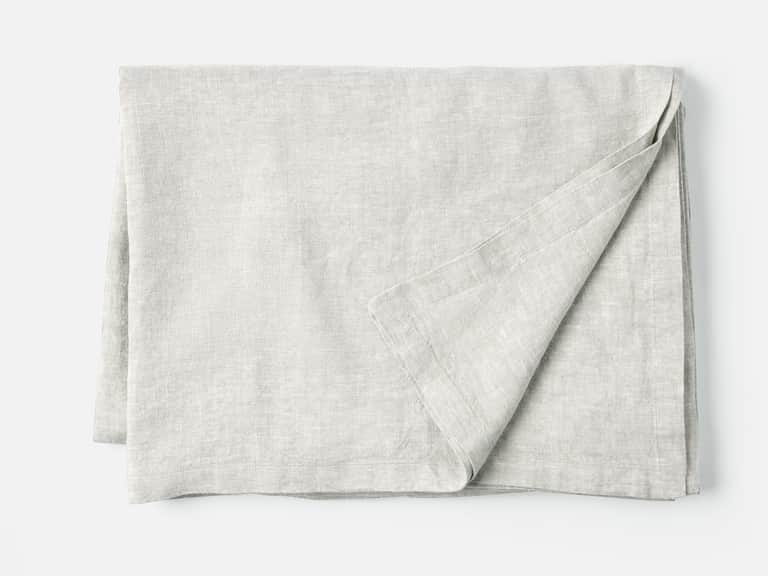
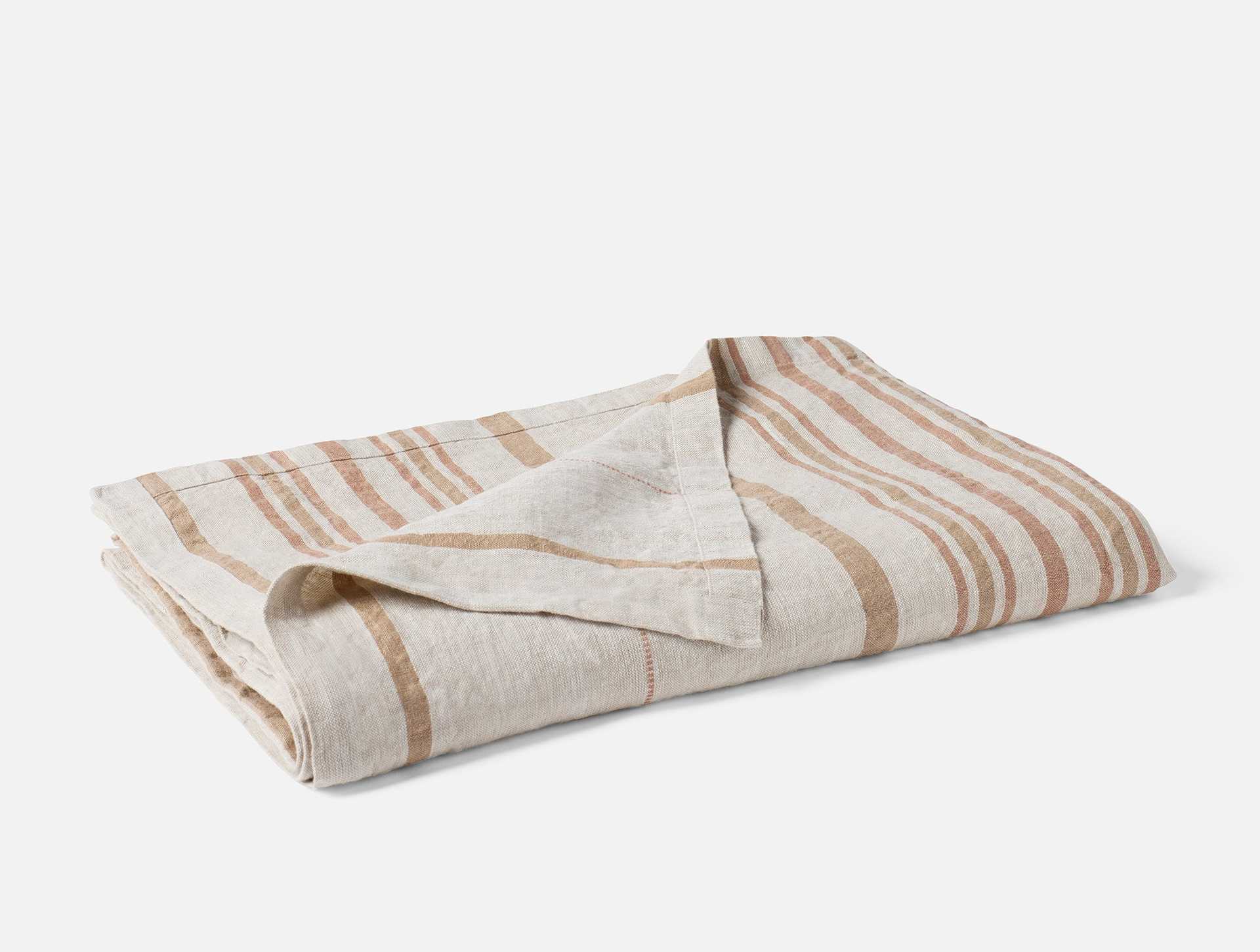
Linen and percale offer two distinct routes to a calm bedroom. Linen is woven from flax fiber, while percale commonly describes a cotton weave. Linen’s longer, naturally irregular fibers often create visible slubs and a more varied surface. Its drape can feel relaxed and substantial, and its texture is part of its visual language. Percale, by contrast, generally presents a more even, smooth plane and a cooler, more tailored hand.
These differences are not a contest between a better and a lesser material. They are differences in sensation, appearance, and response to use. Someone who enjoys a gently rumpled bed and pronounced texture may gravitate toward linen. Someone who prefers a crisp, clean-feeling surface and a more orderly finish may favor percale. Both can be breathable, durable, and suitable for regular use when the fabric is well made and cared for according to its instructions.
In a minimalist room, the choice can be understood as a choice about visual rhythm. Linen introduces variation: small folds, subtle irregularities, and a lived-in softness. Percale tends to quiet the surface and define the bed’s outline. A restrained palette can support either, but the resulting atmosphere differs. Linen often reads as relaxed and tactile; percale as composed and fresh.
Layering also offers a way to combine qualities without asking one textile to do everything. A room might use percale for the sheets and a textured blanket or linen accent for contrast. The key is to consider how fabrics meet: how their weights sit together, how their colors change in daylight, and whether the overall bed feels inviting rather than overworked.
Construction details that matter after the first night
The character of a sheet set is not limited to the fabric surface. Hems, seams, elastic, and dimensions determine whether the pieces work comfortably in daily life. A neatly finished hem can give a flat sheet or pillowcase a durable edge and a subtle visual border. Examine whether the stitching is even and secure, especially at corners and points that will be tugged during routine bed-making.
Fitted-sheet pocket depth is one of the most practical specifications to check before choosing a set. The stated depth should accommodate the mattress, including any topper, while leaving enough fabric to tuck securely beneath it. Measure the full height of the sleeping surface rather than relying only on the mattress’s advertised depth. A pocket that is too shallow can pull loose; an excessively generous fit may gather or shift, depending on elastic placement and mattress shape.
Elastic coverage and quality also affect fit. Full-perimeter elastic can help hold a sheet in place around the mattress, but the finished dimensions still need to suit the bed. If a set lists a 15-inch pocket, for instance, treat that as a useful construction measurement, not a promise that it will fit every mattress combination. Compare the stated dimensions with your own measurements and consult the product’s size guidance.
Set contents deserve a careful look as well. A “sheet set” may include different numbers of pillowcases depending on the size, while a separately sold flat sheet or fitted sheet may be intended to complete an existing collection. Checking what is included avoids assumptions and helps make a more considered purchase. Details such as pillowcase dimensions, flat-sheet hem width, and the availability of individual components can make a difference over the years, particularly when one piece wears out before the others.
Thread count is only one measurement, and it cannot fully describe fabric quality or comfort. Weave, yarn quality, finishing, and construction all contribute. For percale, a clear description of the weave and a credible account of materials and manufacturing are generally more informative than treating a high number as a guarantee of superior bedding.
Washing percale without washing away its character
Good care begins with the label. Instructions vary by fabric, finish, dye, and manufacturer, so the guidance attached to a particular set should take precedence over a universal rule. Many organic cotton percale sheets can be machine washed, but water temperature and cycle recommendations differ. When care instructions call for a cold or gentle wash, follow them rather than assuming hotter water will make the fabric cleaner or more durable.
Wash sheets with like colors and avoid overloading the machine. A crowded drum can restrict movement, leave detergent behind, or increase creasing and friction. Use an appropriate amount of detergent: more soap does not necessarily mean a cleaner result, and excess residue can affect the feel of cotton. Bleach and stain treatments should be used only when compatible with the fabric and care label; chlorine bleach can weaken fibers and alter color.
Lower heat is generally kinder to cotton than prolonged, high-temperature drying. If the care label permits tumble drying, a low setting and prompt removal can help limit unnecessary heat exposure and deep creasing. Line drying is another option where conditions and space allow. It may leave the cloth with a slightly more structured feel, while a short tumble can soften it. Both methods have practical trade-offs, and the preferred result is partly a matter of taste.
Ironing is optional. Percale’s smooth, matte surface can look composed without being pressed, particularly if sheets are removed from the dryer promptly and folded or placed on the bed while still slightly warm. Those who prefer a sharper finish can follow the care label’s ironing guidance. A warm iron is often sufficient for cotton, but the recommended setting depends on the specific fabric and finish.
Rotating between sets spreads wear, while repairing a small seam early may extend a sheet’s useful life. Storing clean bedding in a dry, well-ventilated place helps prevent mustiness. Avoid sealing damp textiles away or placing them near sources of excessive heat. A small routine—wash gently, dry thoughtfully, and store fully dry—can protect both the feel of the cloth and its serviceable life.
A slower measure of durability
Durability is not a single number printed on a label. It emerges from fiber quality, yarn strength, weave, stitching, laundering, and the strain of everyday use. Percale’s balanced plain weave can make a sturdy fabric, but durability depends on the actual cloth and its construction. A sheet worn thin in the center, a seam that unravels, and a fitted corner that loses its hold point to different issues and may call for different solutions.
Buying thoughtfully can mean choosing a fabric that suits the way a person sleeps and maintains a home, rather than selecting a textile because it has the longest specification list. A crisp sheet that is used and cared for over many years may be more meaningful than a neglected set with a more impressive label. Longevity, repair, and repeated use are practical elements of a more considered approach to bedding.
Organic standards can contribute useful information about the production chain, but sustainability is broader than a fiber claim. The amount of water and energy used in processing, chemical management, worker conditions, transport, packaging, and product lifespan all influence the larger picture. It is sensible to distinguish verified certifications and specific disclosures from sweeping environmental language. Transparency is a starting point for evaluation, not a substitute for it.
Choosing by touch, room, and routine
Before choosing Coyuchi organic percale sheets—or any percale bedding—consider three questions. First, what surface do you actually like against your skin: crisp and smooth, or textured and fluid? Second, what mood should the bedroom carry: tailored simplicity, or an intentionally relaxed softness? Third, how will the sheets be washed and dried in your household? A fabric that fits both preference and routine is more likely to be used and cared for well.
If possible, handle a fabric swatch or feel percale in person. Online descriptions can explain weave and specifications, but touch is personal. One sleeper may interpret crispness as refreshing; another may find it too structured. The first wash can also change the hand, so care for a new set as directed and allow time for the fabric to settle before drawing conclusions.
For a clear, understated bedroom, percale offers a dependable foundation. Its matte surface does not demand attention, and its structured feel can bring definition to soft furnishings and loose layers. It can be styled with simple colors or paired with more expressive textures. The purpose is not to achieve a perfectly smooth display bed, but to choose a fabric whose everyday character supports the way the room is lived in.
The quiet pleasure of a well-chosen sheet
Percale’s appeal is less about spectacle than consistency. Its plain weave creates an even, breathable cotton surface; its crisp hand brings a sense of freshness; and its simple geometry suits bedrooms shaped by restraint. With Coyuchi organic percale sheets, the useful questions remain concrete: What fiber is used? How is the fabric woven and finished? What do the dimensions and construction details tell you? How should it be laundered?
Answering those questions makes the difference between shopping by shorthand and understanding the textile itself. Percale is not linen, though both materials can support a natural, quiet interior. It is not a promise of perfect sleep, nor does organic certification explain every aspect of production. It is, instead, a particular way of organizing yarns into cloth—one that rewards careful making and gives the bed a smooth, cool, quietly crisp character.
In the end, the best bedding is not necessarily the most elaborate. It is the bedding that feels right at night, fits the mattress, holds up to ordinary care, and belongs in the room without overwhelming it. Percale offers a compelling answer for those drawn to clean lines and a cool touch: comfort, expressed through the clarity of a simple weave.